

How To Clean A Newborn's Belly Button
Past Elizabeth Helen Spencer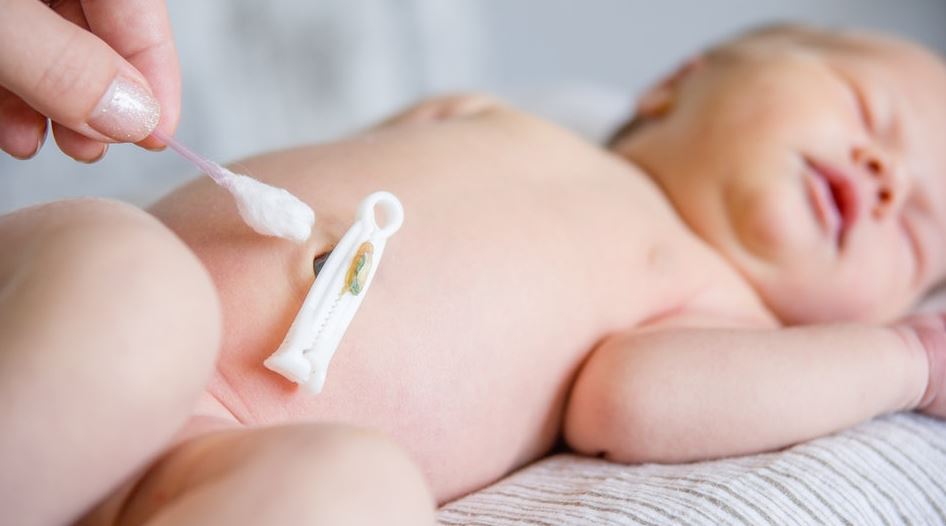
For twoscore weeks or so of pregnancy, you planned and anticipated. Now the flick in your mind is a living and breathing newborn. After a brusque hospital stay that oftentimes feels too brief, you get to accept baby home and treat them without the assistance of the nursing team. For many new parents, this transition is a shock, regardless of how many books you read. There's so much to do and newborn abdomen button care is no small part of your to-do list. Knowing how to clean your baby's belly button is of import and honestly, y'all're probably as well slumber deprived to recollect the instructions from the infirmary. Both the World Health Organization (WHO) and the American University of Pediatrics (AAP) recommend a dry out approach to bellybutton care until the umbilical cord stump falls off inside the kickoff 1 to two weeks of life.
What does "dry care" mean when it comes to your baby'due south umbilicus? "Simply keeping the umbilical cord make clean and dry," Catherine Gritchen, a pediatrician at Miller Children's and Women's Hospital in Long Beach, California, tells Romper over email. Before 1998, when WHO changed its recommendation to dry out intendance, the standard approach to omphalus care was to utilize antibacterial or antiseptic topical intendance to the cord stump. However, explains Gritchen, "Using any type of antibacterial application (such as alcohol or triple dye) really tends to delay the string separation because it kills off the benign bacteria that assist with separation. Also, it tin can select for opportunistic 'bad' bacteria, really increasing the run a risk of infection." In poorer countries where clean water and hygiene are non guaranteed, this "wet" approach is notwithstanding used, but it is no longer necessary or considered best practice in the U.s..
While nosotros commonly think and refer to it as a abdomen push, it's important to continue in listen that a newborn doesn't really have a belly push button until their umbilical cord stump falls off. Until and then, "the umbilical cord stump is a healing tissue from the placenta," explainsTrung Tristan Truong, MD a pediatrician at MemorialCare Saddleback Medical Center in Laguna Hills, California. This is why infection (called omphalitis), if it occurs, can be serious. Babies demand to receive intravenous antibiotic therapy in the infirmary if they contract omphalitis.
Equally function of baby'south daily routine until the string stump falls off, "you lot should keep the umbilical cord dry out and fold the diaper downward below the cord so that it doesn't get moisture from urine," Gina Posner, a pediatrician at Orange Coast Medical Center in Fountain Valley, California, tells Romper over email. This ways no immersive bathing (sponge baths are okay) during the period of cord stump intendance. "If the cord stump comes into contact with urine or fecal matter, merely clean it with water," adds Truong.
"After the cord falls off, the stump may exist moist and take scrap of bleeding around the edges," says Gritchen. You can "merely wash with soap and water and pat dry," she adds. Subsequently the belly push button area is completely healed and dry, you can brainstorm a normal bath rountine for your infant.
Luckily, all three doctors say the instructions for navel cleaning and care are the same whether y'all're 1 month old or an adult: treat it like whatsoever other creased or folded area of skin. Don't rub too hard, be gentle, and use a Q-tip if you need to remove droppings or water. Everyone's bellybutton scar is unique, and beyond the inner/outie dichotomy, some navals are deeper or more than folded than others. As your newborn grows into an older baby and young toddler, abdomen buttons (theirs, yours, the whole family's) become a source of amusement. You lot'll inappreciably remember struggling to get the plastic clench off all those months ago.

Source: https://www.memorialcare.org/blog/how-clean-your-babys-belly-button-because-its-not-exactly-ready-bathing
Posted by: choudhurysorge1977.blogspot.com
0 Response to "How To Clean A Newborn's Belly Button"
Post a Comment